





Leaks and floods ignore the clock. A supply line can let go at 2am, and every hour it runs, more of your home gets wet. In Livonia, we pick up emergency calls around the clock. You talk to a live person who gathers the basics and dispatches a crew. Our only job on the initial visit: shut down the water and hold the damage where it is.
Here is what happens when you call. We ask where the water is coming from, whether it is still running, and whether the power is safe. If you can reach the main shutoff, we talk you through closing it. After arrival we track down where the water started, meter each room for moisture, and get the water out. Furniture and belongings get moved or blocked up off the wet floor.
Speed matters because water damage gets worse on a clock. Within hours, water climbs up into the drywall. Wood floors start to cup. In 24 to 48 hours, mold may start to grow. A job that is handled the same night is usually smaller, shorter and cheaper than one left until the weekend is over. Not certain it counts as an emergency? Call, and you will get a straight answer.
Why Emergency Water Damage Restoration Is Not a DIY Job
In an emergency, the hard part is not mopping up what you can see. It is knowing where the rest of the water went. Baseboards, wall cavities and the space beneath flooring all take on water in minutes. Our team uses moisture meters and thermal imaging to find it, so the wet areas you cannot see are treated the same night instead of being found weeks later as a smell or a stain.
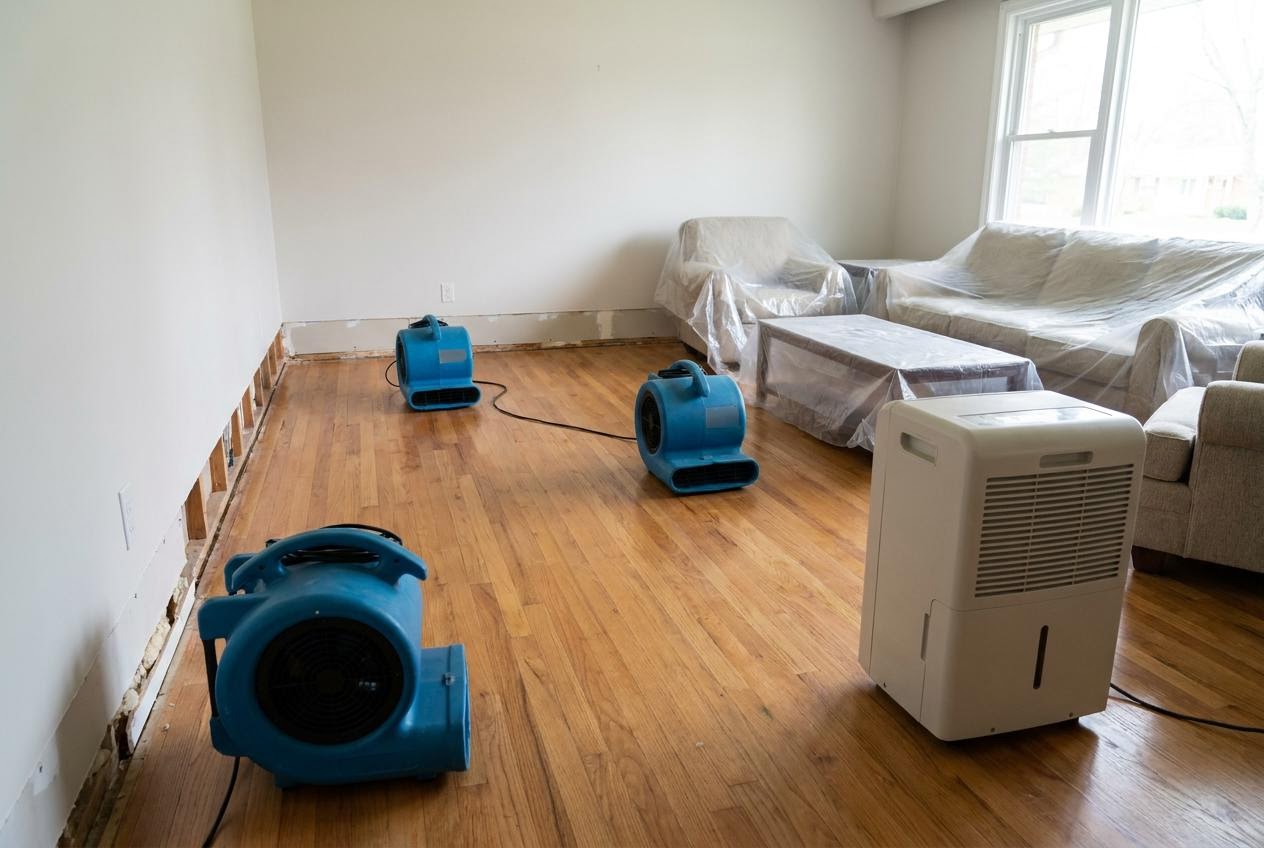
Truck-mounted extractors, commercial-grade air movers and dehumidifiers matched to the room come with the crew, and no household keeps those around. We know how to work safely around wet wiring and contaminated water, and we document everything with photos and moisture readings from the first hour. When it comes time to file a claim, that documentation helps. From the first night to a dry house, a single crew stays on your job.
Ready to Solve Your Emergency Water Damage Restoration Problem?
Our IICRC-certified technicians are standing by to help.
Get Help: (785) 203-1098Emergency Water Damage Restoration Prevention Tips
A little prevention goes a long way in avoiding expensive restoration emergencies. Follow these tips from our IICRC-certified technicians:
- Insulate pipes in unheated spaces so they do not freeze and split in cold weather.
- Being able to find the electrical panel quickly means wet areas can be de-energized without risk.
- Put leak alarms beneath sinks and beside the dishwasher, washer and water heater.
- Every member of the household should know where the main water valve is and how it closes.
- Going away longer than a few days? Close the main water valve first.
- A sump pump should be tried out before storms arrive, ideally with a backup battery installed.
How Our Emergency Water Damage Restoration Works
Our systematic approach delivers quality results on every project. Here's how we handle emergency water damage restoration from start to finish:
Take Your Call
A person answers at any hour, asks about the source, the rooms affected and any safety concerns, and tells you what to do while a crew is on the way to your home.
Shut Off the Water
Once on site, the crew looks for electrical and contamination risks before closing off or isolating the supply behind the leak. Until the flow ends, no other step does much good.
Remove Standing Water
Truck-mounted extractors and pumps take up the standing water while we clear furniture from wet rooms and use meters and thermal imaging to chart moisture hidden in floors and walls.
Stabilize and Plan
The crew does not go until the drying equipment, meaning air movers and dehumidifiers, is running. We then walk you through what we found, what the next 3 to 5 days of drying look like, and what your insurer will need.
How to Tell You Need Emergency Water Damage Restoration
Recognizing the warning signs early can save you time, money, and prevent significant damage to your property. Here are the most common indicators that it's time to call a professional:
- Gallons keep spilling from a ruptured water heater tank.
- Water from a floor above is streaming down interior walls.
- An outlet, a light fixture or the ceiling above has water dripping out of it.
- Trapped water overhead has made part of the ceiling bulge or sag.
- The house was flooded when you walked in, with no telling how many hours it had been going.
- The breaker box, a running appliance or cords along the floor sit in the path of the water.
- Sewage has backed up, or the water is dark with a foul odor.
Early Action Saves Money
What seems like a minor issue today can turn into a major expense tomorrow. If you notice any of these signs, contact Livonia Restoration at (785) 203-1098 for a prompt evaluation.
Want a Professional Opinion?
We provide honest advice and free estimates on all emergency water damage restoration work.
Call (785) 203-1098 NowFrequently Asked Questions About Emergency Water Damage Restoration
Should You DIY or Call a Pro?
Some simple tasks are suitable for DIY, but most water damage work benefits from professional tools, training, and experience. Consider the following comparison:
| Factor | DIY Approach | Professional Service |
|---|---|---|
| After-hours response | Whatever towels and buckets you own | Trained crew on call any hour |
| Insurance record | Whatever snapshots you thought to take | Readings and images logged from the start |
| Safety | Electrical and contamination dangers go unchecked | Hazards checked before work starts |
| Drying setup | Box fans and open windows | Commercial air movers and dehumidifiers |
| Extraction speed | Shop vac, a few gallons at a time | Extractors on the truck lift hundreds of gallons |
Schedule Your Emergency Water Damage Restoration Service
The sooner you call, the sooner we can help. Reach Livonia Restoration for same-day service.
Get Help: (785) 203-1098